
JCC History
Jensen Community Center: From foundations to renovations
By Brent Frankenhoff
The Lettie W. Jensen Memorial Community Center opened its doors to the public on June 6, 1988, but its story starts more than a century earlier with the birth of Lettie Jensen in Amherst on September 8, 1887. Lettie married Samuel Blanc in Amherst on March 25, 1906. After living in Menomonie and Appleton for several years, they moved to Des Moines, Iowa, in 1920, where she died December 26, 1977.
Some time after the move to Iowa, Lettie plugged their home’s plumbing with potato peelings and, while cleaning out the system, Samuel and his son, Milton, figured there had to be a better way to clear such plumbing issues and invented the Roto-Rooter.
Following his mother’s death and acting on her wishes, Milton and his wife, Florence, pledged up to $1 million to fund construction of a museum, a youth center, or a community center in Amherst. At the time, this was the single largest donation to any community in Portage County history. A portion of that pledged amount was to be set aside and invested to insure that the Community Center would be self-maintained and not need to seek government funding of any kind, a policy that is still in place today.
The Blancs initially approached the Tomorrow River Conservation Club in October 1985 with an offer to turn the Jensen home into a memorial such as a library or museum but did not receive a reply. Contacting Amherst Postmaster John Wied, they were put in touch with Tomorrow River Tomorrow (TRT) Chairman Paul Kliegl. According to a March 21, 1986, article in the Tomorrow River Times, TRT had been “recently founded for the purpose of enhancing the quality of life in the area through coordination of efforts in economics, education, environment, human services, and recreation.”
A 12-member coordinating council was formed with three representatives each from the Town of Amherst and the Villages of Amherst, Amherst Junction, and Nelsonville. At that time, the group was looking at such possibilities as creating a joint fire department, obtaining a Tomorrow River area physician, and/or building a youth center.
Tomorrow River Tomorrow was not the only group working on such community projects. In the years prior to the Blancs’ bequest, various civic groups, including the Amherst Women’s Club, had been making requests for a community meeting room for various organizations, such as the Boy Scouts, as well as a space to serve meals three times a week to senior citizens with the Commission on Aging. This eventually became the Community Building Association. After raising monies through auctions and other fundraisers in the early 1980s, the group voted to put that money into a Certificate of Deposit for use if something came up later.
Lettie Jensen
The Jensen Center’s front entrance shortly after the facility opened in 1988.
The Jensen Center's former Game Room featured coin-operated video games, a pool table, and a ping pong table. As interest in the space evolved, it was transformed into today's versatile Activity Room.
Blanc and his wife wanted consideration given to an auditorium-type space, a “multi-purpose” space, and a kitchen with the community center as well as a display area for memorabilia. The only specific exclusion for the Center was a swimming pool, because of liability issues. One other stipulation was that the Blancs wished to remain as anonymous as possible on the project, while still being updated on its progress.
Initially, the Blancs donated $100,000 for the purchase of a building site and architect retention among other start-up expenses. Additional monies were donated as needed and, in a letter to TRT, Blanc stipulated that he would continue donating from his mother’s estate, “as long as we’re on track. I’ll put the brakes on if you’re spending too much too fast, too soon. I’m from an old, old school of pinching money. You’ve got to keep some in the sock for future expenses.”
In May 1986, TRT formed two committees, one to find a suitable site and the other to work on the design of the building.
After being considered as a possible site for the Center, but found to be too small to meet the Center’s needs, the site of the Jensen family home, with adjoining lots, was purchased by TRT and then utilized for the construction of the Lettie W. Jensen Memorial Library.
In June 1986, a community meeting was held to determine needs that a community center could accommodate. An auditorium as part of the Center was one of the main ideas suggested. A follow-up letter to TRT listed a number of possibilities for an auditorium and included, “Just looking around, there seems to be an above-average number of performing artists who call Tomorrow River country home.”
As plans continued to move forward, TRT formed the Amherst Area Foundation (AAF) to oversee the Community Center project, and that group was incorporated October 27, 1986. The AAF continues to direct the overall operations of the Center to this day.
Early estimated costs to build the Center were just over $700,000. Later revisions reduced that cost significantly, resulting in a final total with architectural fees, furnishings, etc. of just under $500,000. Multiple estimates using multiple rates of return on the invested funds and estimates of costs to maintain the building showed how much could be spent on construction. After consultation with financial advisors, the funds allocated for maintenance were invested in certificates of deposit with various terms of maturity.
After consideration of other potential building sites in and around Amherst, $60,000 was offered to purchase the four acres of land (including the former high school baseball diamond) from the Tomorrow River Schools. A portion of the property had to be annexed into the Village. Approved by a vote of 166-86 at a special Tomorrow River School Board meeting February 9, 1987, the transaction was described by School Board President Gale Gordon in the Tomorrow River Times as “a ‘joint venture’ between the school and the Tomorrow River Tomorrow development group.” The $60,000 was used by the school to relocate the baseball field and improve its other athletic facilities.
On October 6, 1987, Blenker Construction’s plan for the building, with an estimated cost of $362,200, met the original construction goals of “a structure that looked good, was durable, quality built, functional in size and design, all at the right price.” Steel beams and girders were used in the construction to make a more maintenance-free building and gain some additional space due to savings over the cost of masonry construction. Pella windows were installed along with five separate heating and air conditioning units to control the various zones of the building. Items dropped from the initial plans to save costs were a patio at the south entrance facing the school and a series of lights along the sidewalk leading to the school. With many requests for an auditorium, a skeleton of a theater with no heat or air conditioning was included during initial construction, which began later that same month. Many area businesses were sub-contractors on the project, with several donating materials or labor to the construction, which helped to control costs. The Center continues to benefit from those types of donations today from many local service providers.
Volunteers also pitched in to make the Center a part of the community by painting, decorating, landscaping, moving furniture, and more. Former Center Director Mary Peplinski said, “We made sure that the community members felt that they were the ‘owners’ of the Center and that we all needed to care for it so that our children and grandchildren will have access to this fine facility. We are very lucky to have such a facility available for all generations of the Tomorrow River area.”
After nearly eight months of construction, the Lettie W. Jensen Memorial Community Center opened its doors for business June 6, 1988. Its first event was a High School Spring Sports Banquet the next day.
The Commission on Aging’s senior mealsite, then held at the American Legion, moved to the Center June 14, 1988. The Commission had significant input into the design of the Center’s kitchen space, and the manager of the Amherst mealsite, Pam Piotrowski, became the Center’s first Building Manager.
Following an official grand opening on August 7, 1988, more events came to the Center and, in the 35 years since its opening, the Center has hosted innumerable events, including community meetings, educational seminars, baby showers, bridal showers, wedding receptions, anniversary parties, class reunions, family reunions, celebrations of life, funeral dinners, and the list goes on and on.
Among those many activities were a group of seasonal art classes (Summer in the Arts, Fall into the Arts, Winter in the Arts, and Spring into the Arts) begun by then-Executive Director Jodi Engum-Kryshak, who told the Spirit that, “they were well received and help fill a void in the community for all ages. I worked with very fine community artists, who created unique and engaging classes.”
In the first year of operation, the AAF Board of Directors began plans to finish the theater, exploring possible layouts, seat options, and more. Funding for the project was not to come out of investments, but be generated by donations and fundraisers. You’ll find that part of the Center’s history below.
A large brick and concrete planter added a touch of green to the front of the Center. Area children, with some adult help, tended the planter.
The Jensen Center’s many programs, events, and fundraisers would not be possible without the dedication of volunteers, including this group from 1995.
Over the past 38 years, the Jensen Center's lobby display cases have told countless stories through unique collections, local history, and community displays.
Madrigal Dinners, featuring entertainment by students from Tomorrow River Schools, were held at the Jensen Center as fundraising events throughout the 1990s.
Theater History
Raising the curtain on the Jensen Center Theater
By Brent Frankenhoff
At the top of this page, we focused on the portions of the Jensen Community Center that were completed and opened to the public 35 years ago on June 6, 1988, with a grand opening celebration held August 7, 1988. Financed by a $1 million bequest from the family of former Amherst resident Lettie Jensen, the Center filled a community need that had been expressed for a number of years.
As plans for the Center were being developed, then-Amherst High School Principal Bob Lane, Tom Pease, LaVerne Peterson, Sue Weller, and Dan Roarty met on March 2, 1987, to discuss an auditorium for the Center. Traditional rows of seats to accommodate 240 to 300 patrons was suggested. The local community theater group, plus the high school theater group, and other performers were considered as the primary users of the space.
When the Center opened in 1988, the theater was just a shell with a concrete stage and a sloped floor. Concerts and other performances were held in the Community Room or, in temperate months, the unheated and uncooled theater with attendees bringing their own seating.
According to former Center Manager Mary Peplinski, during the first few years of the Center being open, “the auditorium was being used as a cold storage space for the Tomorrow River Historical Society. After much discussion, it was decided to work on getting funds raised to complete the auditorium.”
As required in its bequest, the remainder of the Jensen family donation that built the Center had been invested to insure that the Center would be self-maintained and not need to seek government funding of any kind, making those funds unavailable for completion of the auditorium.
A committee was formed with Peplinski as chair representing the Center’s Board of Directors. Other members included Terry Anderson, Dick Pavelski, Tom Ehr, Butch Pomeroy, and Don Aylesworth. A series of fundraisers soon acquired $130,000 and plans to finish the theater were developed, starting with heating and air conditioning or, as Peplinski put it, “First heat, then seats.”
To raise $240,000 for the next phase of theater completion, “The Grand Finale” fundraising drive was launched with various donation levels ($2,000 for a “Director,” $1,000 to $1,999 for a “Performer,” $50 for a “Stage Hand,” and $300 for one theater seat or $500 for two). At the time, the fundraising committee wrote, “Like the Amherst Opera House of the 20th century, this auditorium will be a community resource for the 21st century. When completed, it will be a facility worthy of attracting and accommodating a variety of social and cultural activities and performances and will continue to enhance the quality of life in the Tomorrow River community.”
Two hundred forty-two professional seats were purchased and installed, and a grand opening and dedication ceremony was held November 6, 1994.
Peplinski said that the community really supported the new theater, especially addressing needs as they arose. “Until we had our own installed, we used lights from the Tomorrow River Community Theater,” she added. “We had plays, the New Hope Children’s Community Theater, and other performers who helped raise funds along the way. We had volunteers from every user group as well as donations from everyone in the community big and small. My fondest memories were working with all the community groups, especially the children.”
During the remainder of the 1990s, carpeting from the Center’s lobby and hallway was repurposed for the theater after a cleaning accident significantly damaged portions of the carpet and, as more funds were raised, professional lighting and sound systems were installed. Peplinski said, “We kept finishing projects one at a time. It’s been the policy for years to keep improving as we can afford it.”
Jodi Engum-Kryshak was involved with the theater long before she was hired as Executive Director in 1996, serving on a “committee that toured area theaters to learn more about the many pros and cons of theater construction and equipment options so that we could present recommendations,” she said. During her six-year tenure, she was instrumental in finishing the theater, bringing her knowledge and experience to the project. Her husband, Mark, also made many contributions to the Center, including painting the theater and helping raise funds for its completion.
“I appreciated that we were home to the Tomorrow River Area Community Theater and the New Hope Productions Children’s Theater,” Engum-Kryshak said. “Those were very busy times and rewarding experiences for the entire community.”
In April 2000, lighting and stage consultant Dave Carlson completed a survey of the then-existing theater and had a number of recommendations, including replacement of the outdated curtains, upgrades to the lighting system, and expansion of the theater stage area. After obtaining estimates, several suggestions, including expansion of the existing space, were put on hold in early 2002, due to costs. The remaining parts of the project became a new phase of theater completion. As part of that phase, a wooden “floating” floor was installed on the stage in early 2002 giving performers a vastly improved platform over the former concrete floor.
In 2014, a combined theater and bathroom expansion project was developed with plans drawn up and estimates given. Due to the high cost at the time and a sagging economy, the theater expansion portion of the project was set aside in September 2015, while the bathroom remodel moved ahead. That remodeling project relocated an office/meeting room to the former coat room, eliminating valuable storage space.
In early 2023, theater users were consulted and plans drawn up for a possible expansion of the stage, adding much-needed dressing rooms, bathrooms, and storage to the backstage area. In addition, new stage lights and curtains for the deeper stage as well as a long-needed expansion of the sound booth were also included in the plans.
Peplinski said, “We really need to expand the stage and backstage areas as we have increased the numbers of community members, especially youth, participating in our many events and productions. This project would help improve safety issues that arise from the larger numbers of participants.”
After initial estimates for the full project came in considerably higher than anticipated, the Jensen Center Board of Directors voted to re-evaluate the project, forming a pair of committees, one to break the project into stages with an objective to enhance the Center’s usability and the other to identify funding options.
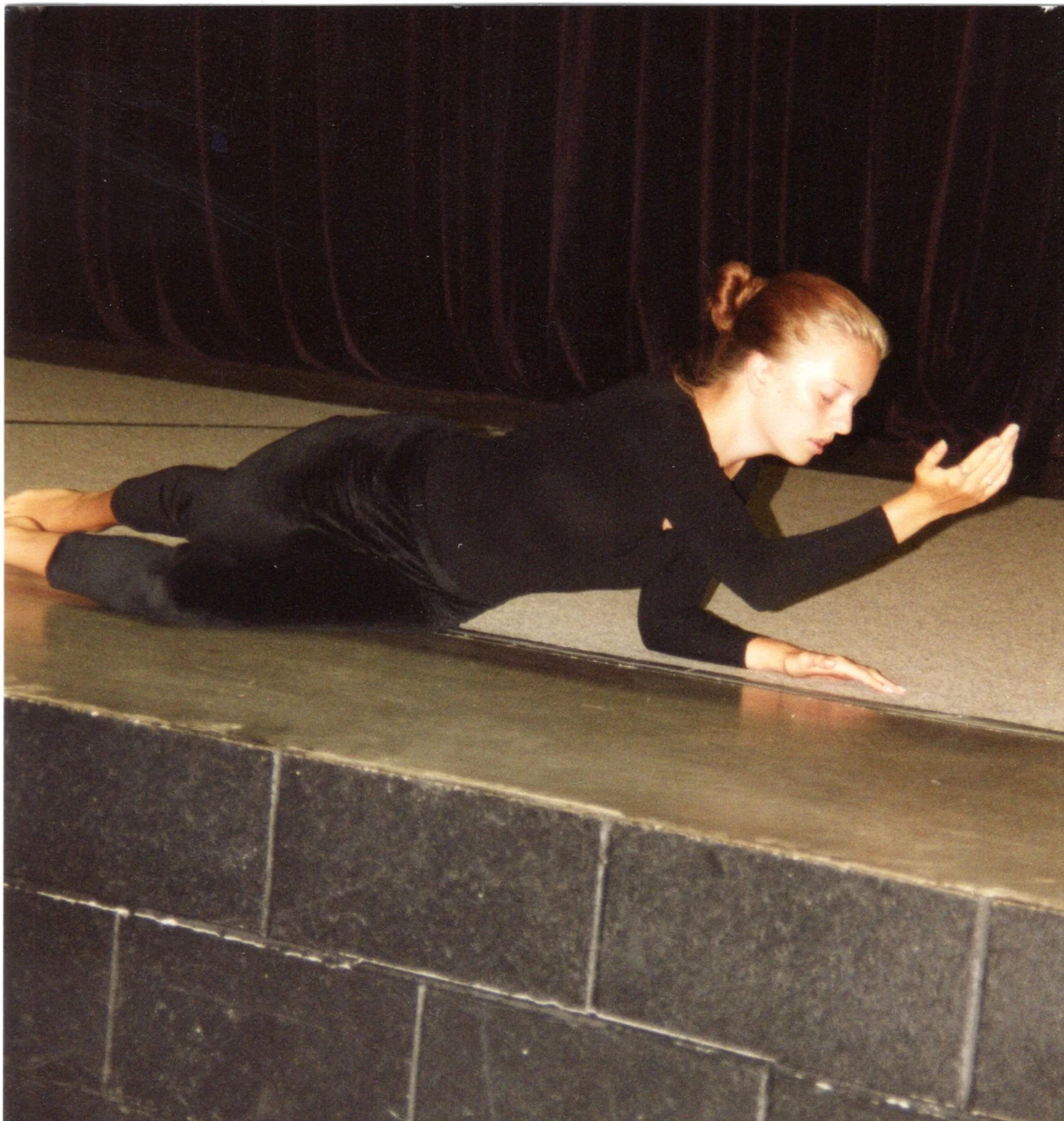
When the Jensen Center opened in 1988, the theater was an unfinished shell with a poured cement floor
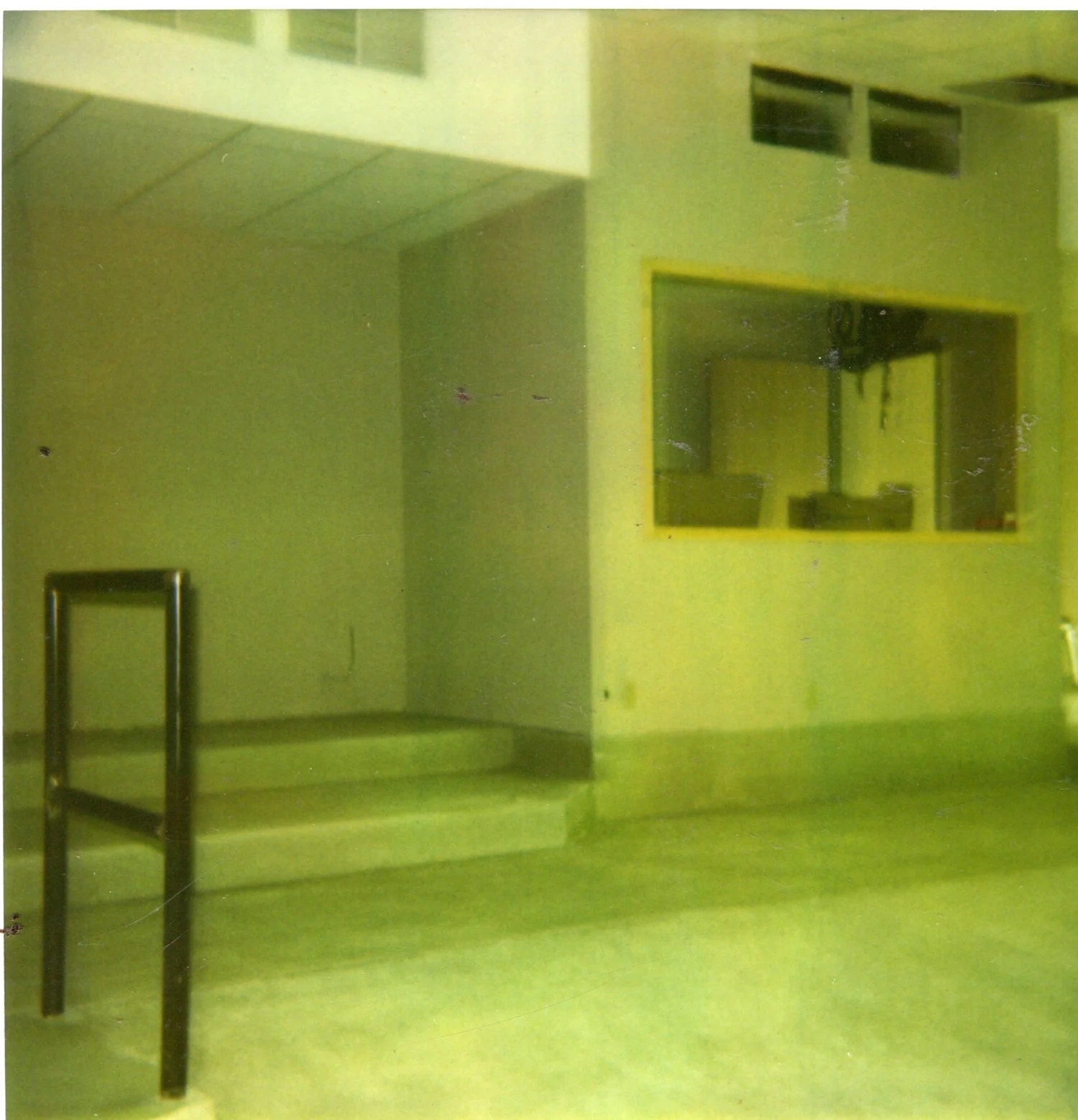
The start of the theater and sound booth.
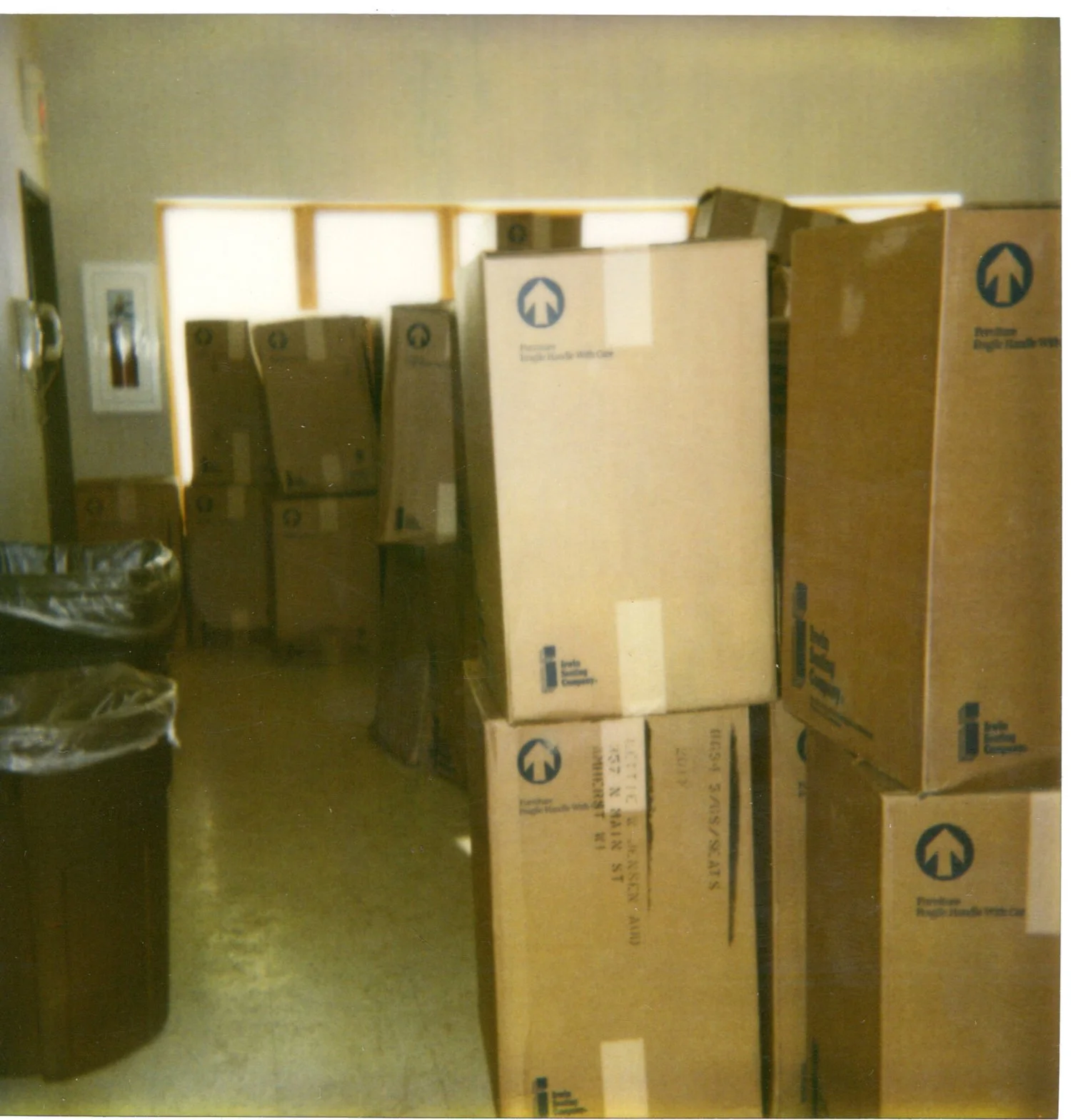
As money became available, thanks to donations and fundraisers in the early 1990s, seats were purchased and temporarily stored in the Community Room
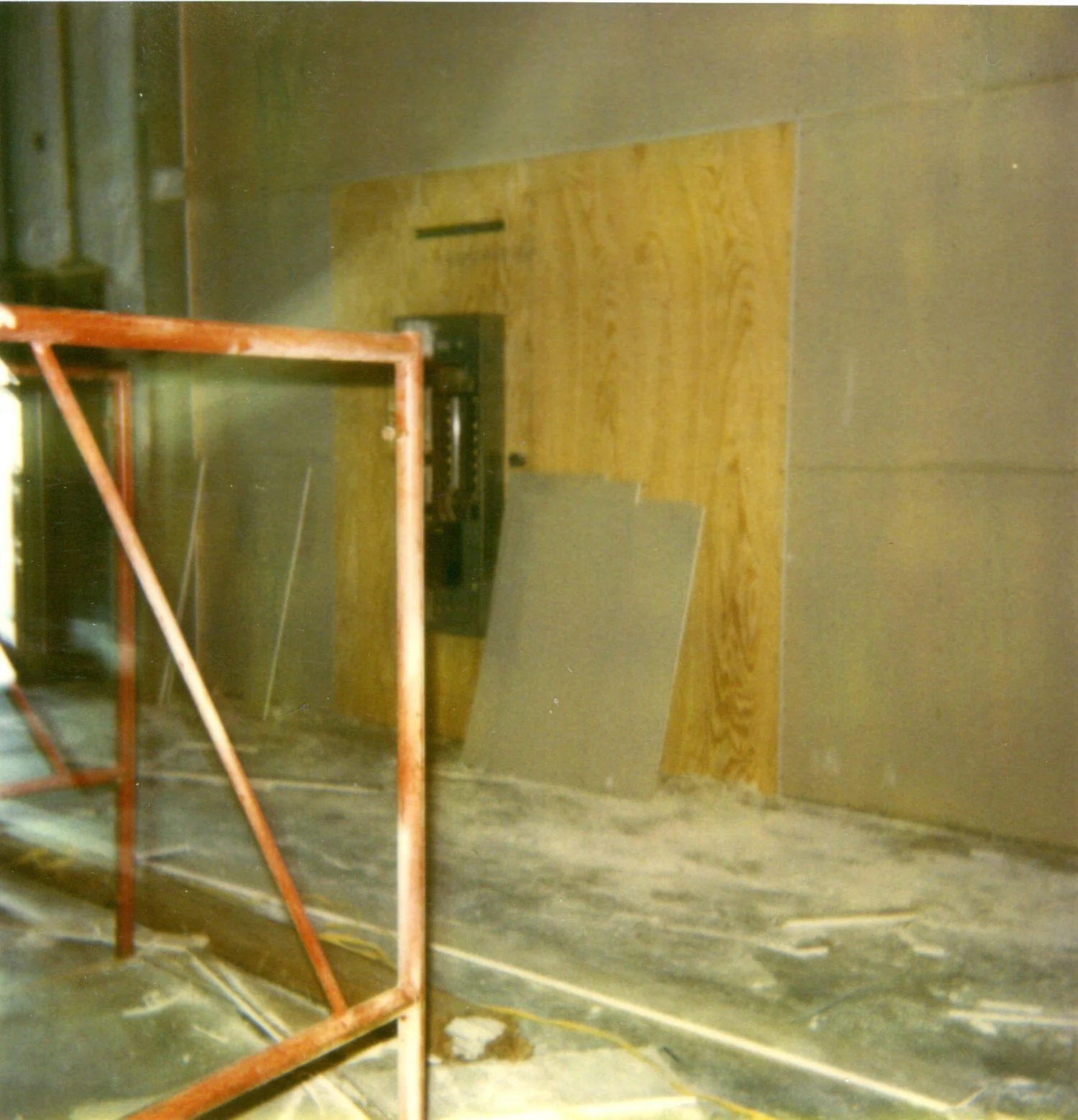
Construction began backstage
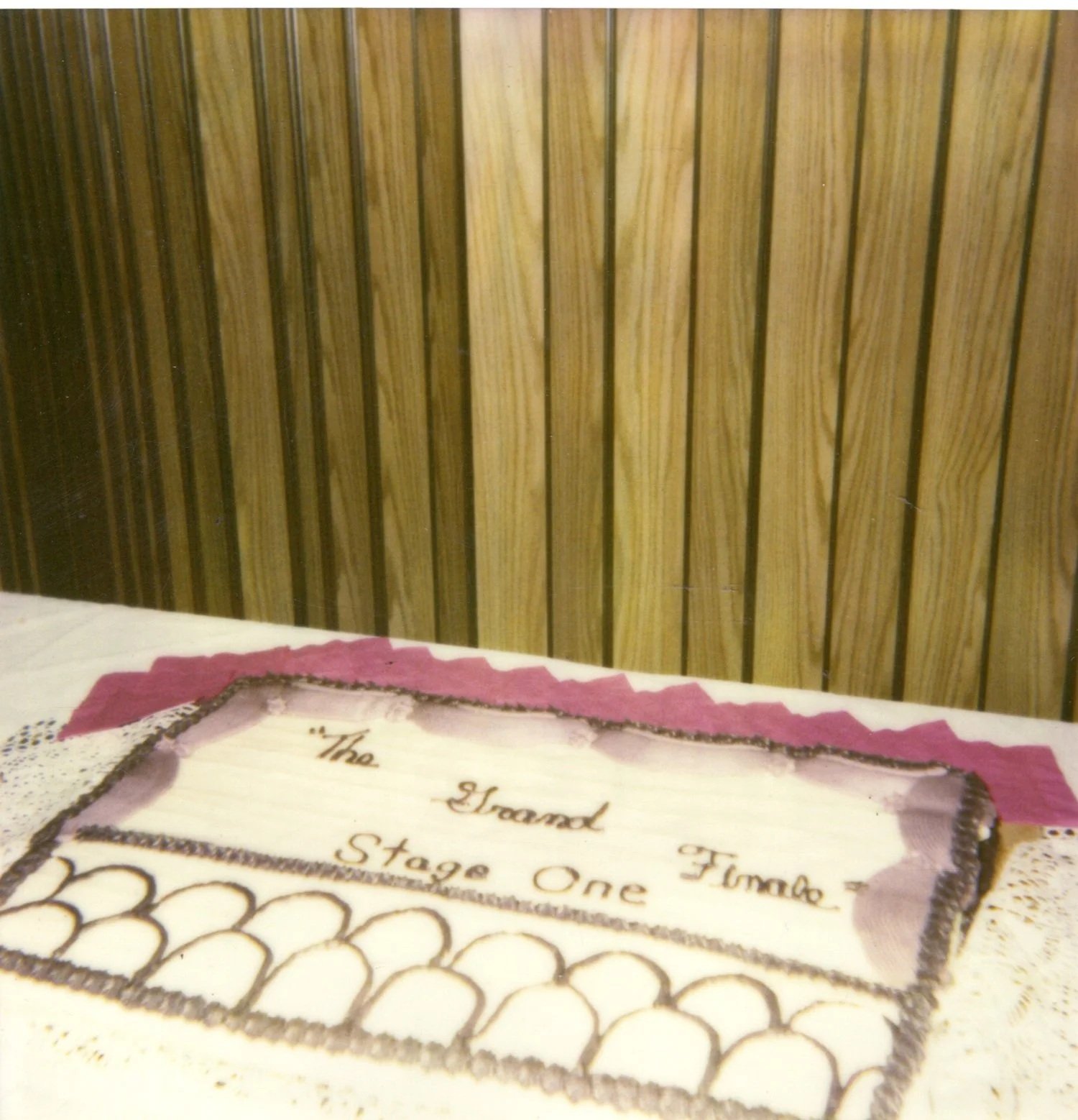
“The Grand Finale” fundraising effort included a party with cake.
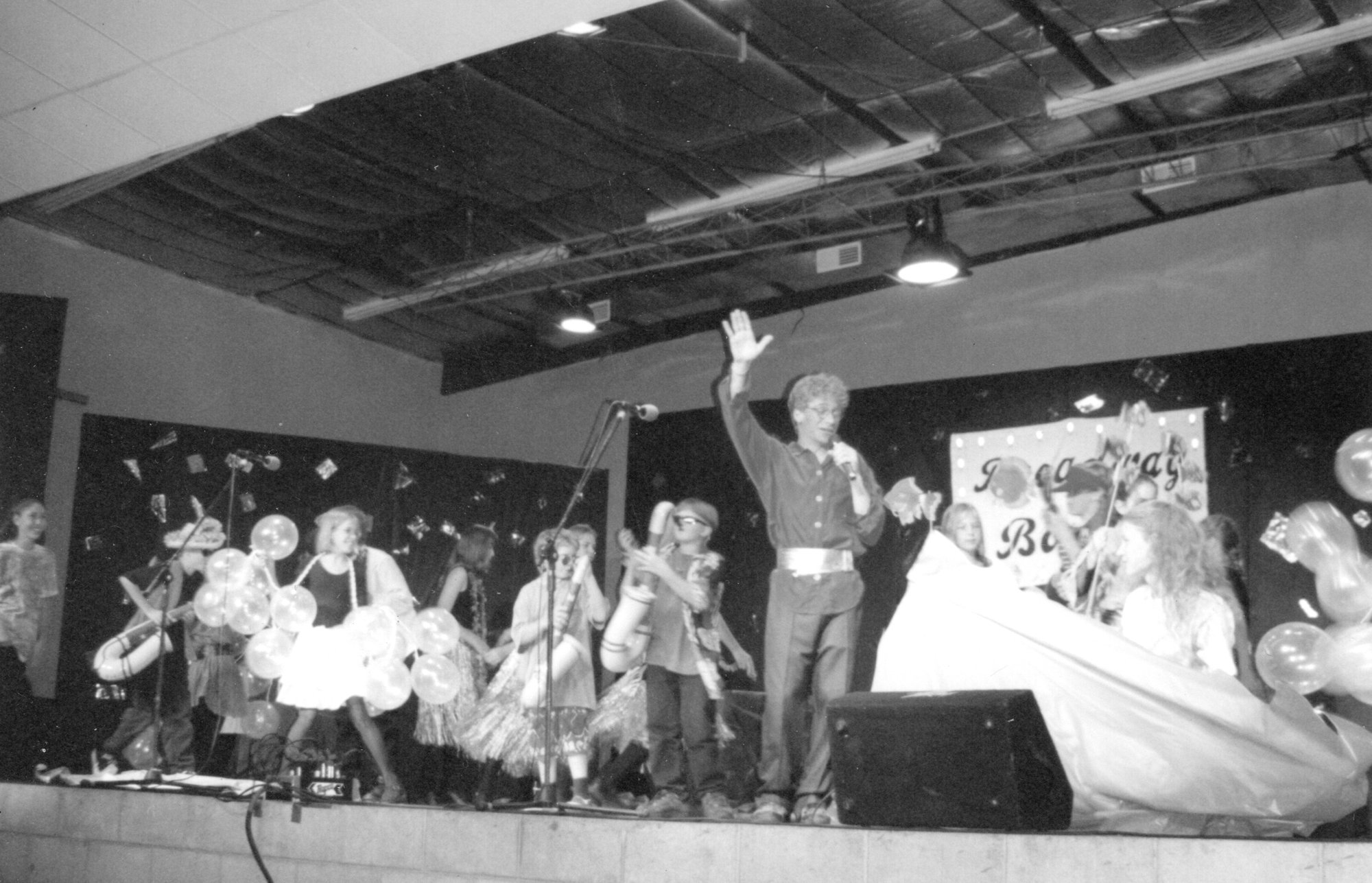
"Broadway Bound," presented by New Hope Productions in 1996.